
ITALIAN FRESH CHEESES: MUCH MORE THAN JUST MOZZARELLA

These cheeses have one thing in common: they are eaten very young, sometimes just a few days after being made. Their milky flavour, creamy texture and versatility in the kitchen make them easy to showcase, whether on the dairy shelf or on a restaurant menu. However, they still need to be sampled by the right people.
Exports of fresh cheeses on the rise
Assolatte, the Italian dairy industry association, has published export figures for Italian cheeses compiled by ISTAT. In 2025, Italy exported 678,974 tonnes of cheese, worth 6.09 billion euros. Volumes rose by 4.6% and value by 12.8% within a year. Mozzarella alone accounted for 160,759 tonnes, up 5.6% in volume. The category comprising burrata, ricotta and other fresh cheeses with less than 40% fat content is growing even faster. It totalled 96,747 tonnes, representing a 10.1% increase in volume and a 17.2% rise in value. Italian fresh cheeses are therefore increasingly finding a market outside Italy.
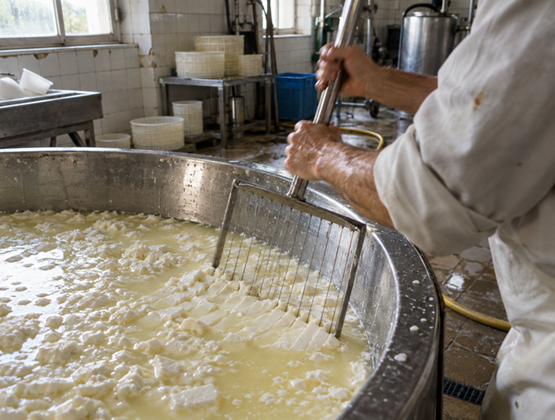
Stracchino: a legacy of transhumance
Casatella and ricotta: two other varieties of fresh cheese
The province of Treviso also has its own protected fresh cheese. According to its protection consortium, Casatella Trevigiana has held Protected Designation of Origin (PDO) status since 2 June 2008. It is the first Italian soft fresh cheese to achieve this recognition. It is made from pasteurised cow’s milk, exclusively in the province of Treviso. Caseificio Tomasoni includes a Casatella Trevigiana PDO in its range.
Ricotta is the other great classic. It, too, can be protected by a designation of origin. According to ARSIAL, the regional agency for agriculture in Lazio, Ricotta Romana PDO is made exclusively from sheep’s whey, throughout the Lazio region.
Among producers of fresh cheeses, ricotta often rounds off the range. This is the case at Caseificio Tomasoni, which combines stracchino with ricottas and semi-matured cheeses. “All our fresh cheeses, from stracchino to ricottas, including semi-matured goat’s and cow’s milk cheeses,” lists Valentina Pasini.
Spreadable cheeses with PDO flavours
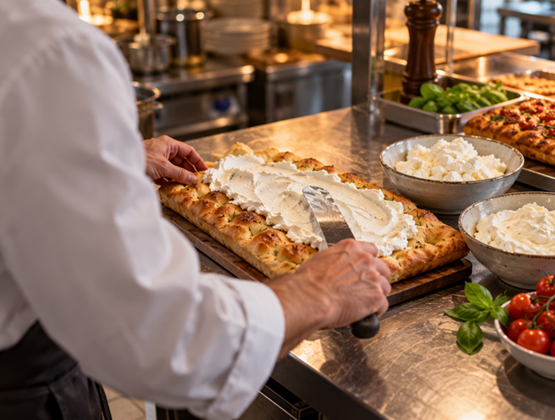
These flavours come from cheeses well known to consumers. The European Commission points out that a PDO requires all stages of production, processing and preparation to take place within the defined region. Gorgonzola is protected by its own consortium.
Parmigiano Reggiano is also protected by a consortium, which has been active since 1934. With these spreads, customers discover fresh cheese through flavours they are already familiar with.
Milk quality and catering: two priorities
Fresh cheese is matured for only a very short time. The quality of the milk is therefore crucial. For this reason, Caseificio Tomasoni works with a milk collection system organised along the supply chain. “Our values centre on preserving product quality. We have a supply chain-based milk collection system to guarantee consumers product quality and compliance with the rules that enable us to offer a product which retains its quality over time,” explains Valentina Pasini. The company is now in its third generation, which is committed to passing on these values. T
he catering sector is the other target market. “There’s no shortage of cheese, but the key is to offer a different range: a balanced flavour, something fresh, something new, to appeal to at least some of the catering sector’s customers,” emphasises Valentina Pasini.
A trade show to meet buyers of fresh cheese
For a producer of fresh cheeses, winning people over starts with a tasting. The Cheese and Dairy Products Show brings together, over three days, the professionals who select the cheeses sold in France. Cheesemongers, supermarket buyers, wholesalers, importers and restaurant owners come to meet cheese makers face-to-face. For a company such as Caseificio Tomasoni, which is seeking to establish a foothold in the catering sector, this is an opportunity to offer tastings of its range to the right contacts.
The 2026 edition brought together 270 exhibitors, representing nearly 400 brands, and 7,600 trade visitors. Of these visitors, 26% were from abroad, representing 74 countries. The number of foreign buyers rose by 25% compared with 2024. Nearly 1,500 business meetings between buyers and exhibitors had been scheduled by the time the event opened.
The show also gave prominence to foreign producers: 48% of exhibitors came from abroad, from 15 countries. Italy had a joint pavilion with Gourmet Selection, the premium food fair held at the same time. Newcomers were well represented, with 33% of exhibitors taking part for the first time.