WHEN GASTRONOMY RAISES THE STANDARD FOR DAIRY PRODUCTS

A chef who has built his cuisine around butter and bread
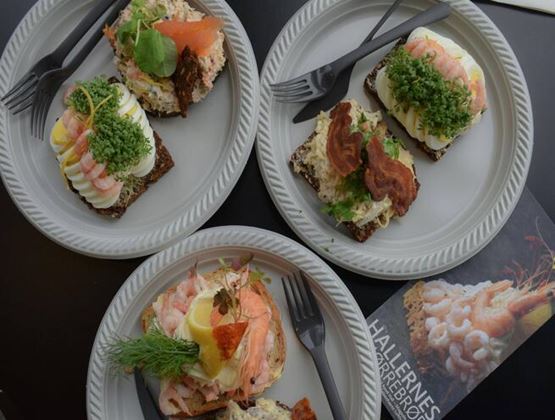
Adam Aamann-Christensen is not your average chef in Copenhagen. Since opening his first restaurant in 2006, he has restored smørrebrød – the open rye bread sandwich that epitomises the Danish lunch – to its former glory. Back then, he explains, no ambitious chef wanted to touch it. The tradition had fallen into decline. Rather than reinventing it, he chose to save it by using far better ingredients and applying his culinary expertise.
Credit: Anastasiya D - Unsplash
It’s been a resounding success! His restaurant Aamanns 1921 features in the Michelin Guide, which praises its superbly crafted traditional smørrebrød, prepared using high-quality produce. And the Aamanns group now ranges from restaurants to corporate catering, with a core principle stated on its official website: organic sourdough rye bread as the foundation of every dish.
Visiting the Cheese and Dairy Products Show, the chef offers an analysis that goes beyond his own story. “Danish gastronomy is far more confident than it was twenty years ago,” he observes. “Much of our success rests on Danish producers, who have started creating exciting products.”
Consistency: the key factor for professionals
When Adam Aamann-Christensen talks about dairy products, he isn’t just talking about taste. He’s talking about reliability. “I run several restaurants and I need consistency for my recipes to work and for my customers to be satisfied,” he explains. “With top-quality Danish organic produce, you get both consistency and quality.”
The chef cites his favourite example: churned butter, with “the perfect balance between acidity, saltiness and richness”. He also mentions cream, which he whips by hand in small quantities to achieve a lighter texture. It’s a technique he finds difficult to replicate elsewhere. “I travel a lot and use dairy products from all over. With my recipes, it’s tricky – except when I’m in France. France and Denmark are on a par when it comes to churned butter, mature cheeses and cream.”
The compliment is worth noting. For a dairy and cheese retailer or a buyer putting together their range, this demand for consistency reflects a daily reality: an exceptional product that varies from one delivery to the next remains difficult to sell and to work with.
Organic as a foundation, traceability as a method
Behind Danish quality lies a collective choice.
Denmark has made organic farming a cornerstone of its dairy sector. According to the Danish Agriculture & Food Council, the trade organisation for Danish agriculture and the agri-food sector, one in every three litres of milk purchased by Danish consumers is now organic, and the Danish organic market ranks among the very top in the world in terms of market share.
This culture of organic food extends to restaurants. Denmark has created a state-backed label for catering establishments, the organic cuisine label, which is divided into three levels depending on the proportion of organic ingredients purchased: bronze (30–60%), silver (60–90%) and gold (90–100%). More than 3,500 Danish establishments display this label, according to Organic Denmark. Adam Aamann-Christensen holds the silver certification for part of his business. “To obtain this certification, I need traceability from my suppliers,” he emphasises. “The hay fed to the cows ends up in the milk, which ends up in the cheese, which ends up on my plate.”
This chain of trust between farmers, dairies and chefs offers an interesting model for all stakeholders in the sector to observe, in France and elsewhere.
When restaurants drive dairies forward
The chef’s account reveals a virtuous cycle. In his view, the Nordic gastronomic movement of the last twenty years has pushed Danish dairies to excel. “Restaurants have been demanding increasingly high-quality cheeses. Some dairies have gone back to traditional production methods. We’ve managed to create a wide variety of excellent quality.”
Chefs’ demand has therefore acted as a catalyst. It has restored value to traditional expertise and opened up a premium market for producers. This dynamic resonates directly with the trade fair’s exhibitors: the catering sector is not merely a sales channel; it is a trendsetter that lifts the entire industry to new heights. The consumer trends analysed in the trade show’s 2026 Trends Report also confirm the growing appetite among professionals for products with a strong identity and clear traceability.
And the chef puts his money where his mouth is. His advice to French visitors to the fair is refreshingly frank: go and sample the Danish cheeses at the stands. “It may seem strange to be standing here in France talking about fine cheeses and fine butter from Denmark,” he smiles. “But I really do recommend it.”
The show, a meeting point for Europe’s dairies
This conversation could not have taken place anywhere else. The Cheese and Dairy Products Show brings together French and international dairy products every two years in Paris. The 2026 edition attracted 270 exhibitors and 400 brands from 15 countries, including Denmark. Danish producers rubbed shoulders with French, Italian, Spanish and Swiss companies in the fair’s aisles.
For a retailer or restaurateur, it is an opportunity to discover in three days what it has taken a chef twenty years to observe: foreign dairy sectors moving upmarket and products that deserve a place in the shop window. For a producer, it offers the assurance of meeting buyers who have come specifically in search of that quality.
Adam Aamann-Christensen concludes his account with a lesson in simplicity. “When you work with great ingredients, you can reduce complexity. After thirty years in the restaurant trade, it’s simplicity that I’m looking for.” A philosophy that always begins in the same place: choosing the right product from the right producer.
The next edition will mark the trade show’s 20th edition, taking place from 11 to 13 June 2028 at Paris Expo Porte de Versailles.
Photo credit: Anastasiya D - Unsplash