
CHEESE IN THE FOOD SERVICE SECTOR

Cheese bars, integrated counters, immersive concepts, snack-friendly formats: models are multiplying and redefining the place of cheese in contemporary uses. For the industry, the challenge is no longer just to supply a product, but to respond to the technical, economic and experiential constraints of catering establishments.
Cheese is becoming a dining experience
Long confined to the end-of-meal platter, cheese now occupies a central position in certain concepts. The rise of cheese bars is the most visible illustration of this. These establishments have democratised cheese tasting by offering an accessible, friendly and unpretentious approach.
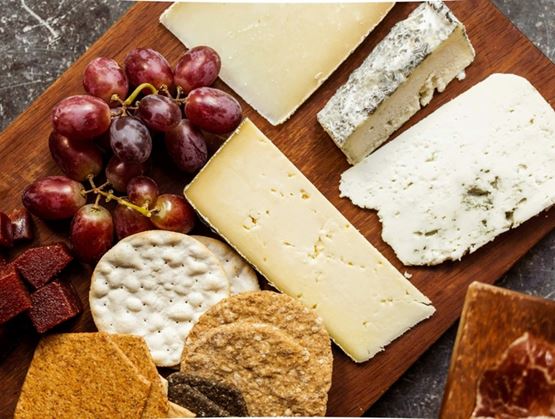
Consumption is designed around sharing: boards, assortments, pairings with drinks. The product becomes the centrepiece of the offering, rather than a simple accompaniment. The development of structured chains with multiple locations shows that a replicable model is possible as long as the selection is carefully curated and the quality remains consistent.
Taking an even more immersive approach, the concept of cheese on a conveyor belt transposes the codes of sushi restaurants to the world of cheese. The plates parade in front of the customer, who chooses visually and composes their tasting journey. This system profoundly changes the act of purchasing: it makes cheese fun, interactive and immediately accessible. The scenography becomes a tool for promotion.
These examples demonstrate that out-of-home catering can transform cheese into an experience. For the industry, this means thinking about the product in terms of service and the customer journey.
Adapting formats to the constraints of professional kitchens
The catering industry operates with specific requirements: speed of execution, control of material costs, regularity of supply and limitation of losses. These constraints require concrete adaptation of dairy products.
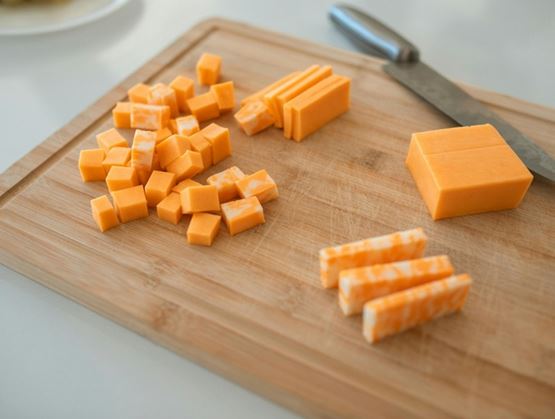
Some suppliers now offer their cheeses in multiple formats adapted to kitchen use: slices, cubes, grated, julienne. The aim is not only to offer a product, but also a technical solution that is immediately operational.
In the snacking sector, brands are developing individual portions designed for mobility and consumption at any time of day, with storage constraints adapted to out-of-home use. These innovations show that the industry can expand consumption opportunities provided that usage constraints are taken into account from the design stage.
This is the case for Driss Azzoug, who offers cheese in sandwich form at his establishment, La Meulerie, in Marseille!
Finally, through the Grilled Cheese competition, the Cheese and Dairy Products Show highlights the creative potential of a seemingly simple format. The hot sandwich becomes a veritable laboratory of innovation: cheese selection, mastery of melting, playing with textures, original combinations, precise work on the bread and fillings. Behind this accessible proposal lies a real cheese-making expertise. The initiative thus illustrates the ability of cheese to establish itself at the heart of quick, attractive formats that are perfectly suited to the new rhythms of out-of-home consumption.
For catering establishments, product stability is essential. Cheese intended to be melted must guarantee consistent results. A product served on a board must retain its visual appearance despite the rapid turnover of services. The industry must therefore work on calibration, packaging and consistent quality.
Adaptation is not simply a matter of increasing retail volumes. It involves designing specific ranges, tailored to professional service.
Counters integrated into other stores make it possible to reach a new customer base and increase purchasing opportunities.
Some professionals now generate a significant portion of their turnover outside their own points of sale. This model is based on structured partnerships, rigorous assortment management and appropriate logistics.
This approach can be directly applied to the food service industry. It requires:
- a consistent and immediately identifiable offering
- products suited to the skills of the staff -
- support in promoting the product
Not all establishments have extensive cheese expertise.
Offering products that are technically easy to handle, with clear information on origin and ripening, facilitates their integration into menus.
Towards a structure dedicated to the food service industry
The food service industry, like any other form of catering, requires specific organisation: dedicated sales teams, a detailed understanding of service flows, adapted packaging and anticipation of volumes.
Examples such as cheese bars, counters and immersive concepts such as conveyor belts show that innovation is already at work. The sector has the necessary expertise, but needs to organise it into a coherent strategy. This involves:
- segmenting offers according to the type of establishment
- investing in ready-to-serve formats
- securing the supply chain
- supporting restaurateurs in promoting the product
Out-of-home catering is now a key growth area for cheese. It transforms the product into an experience, requires greater technical rigour and opens up new opportunities for visibility. For the industry, adaptation does not mean simplifying the identity of cheese, but making it compatible with the rhythms and expectations of contemporary catering.
Visit the Cheese and Dairy Products Show from Sunday 7 to Tuesday 9 June 2026, the unmissable event for professionals in the sector.