
CHEESE IS REINVENTING ITS CONSUMPTION OCCASIONS IN 2026

Figures collected by market research organisations all point to the same conclusion: cheese remains a staple food, but the occasions on which it is consumed are diversifying rapidly, driven in particular by the under-35s.
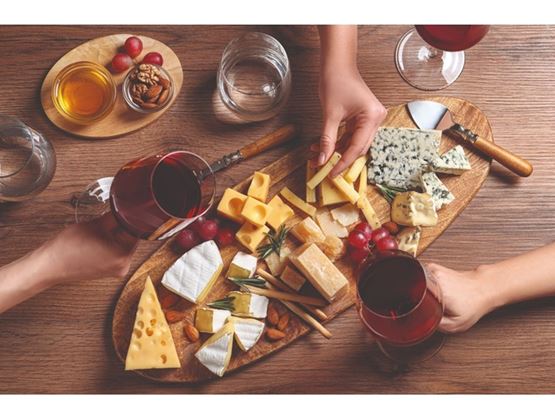
This trend, identified and dubbed ‘New Dairy Avenues’ in the 2026 trend report, reflects a reality that many observe at the counter or in shops without always realising its full significance. The traditional cheese platter, long regarded as the standard way to enjoy cheese, is no longer the norm amongst younger generations. In its place – or rather alongside it – more relaxed, quicker and more creative ways of enjoying cheese are emerging. Cheese is being cooked with, eaten as a snack, grilled, drizzled with sauce, shared as an aperitif, and even paired with non-alcoholic drinks as part of the rapidly growing trend for ‘soft pairing’.
The trend on a cheese platter
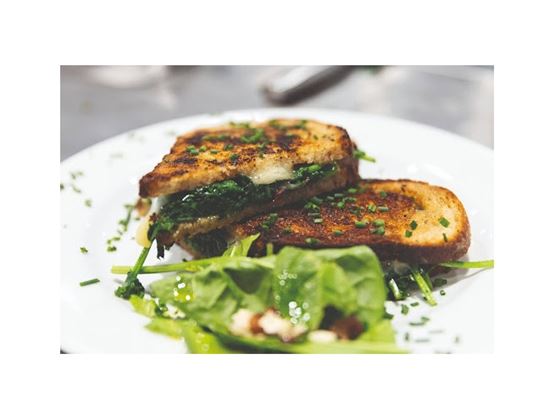
Cheeses also play a starring role in snacks such as sandwiches, croque-monsieurs and salads. In Australia, for example, it is almost unthinkable for a dairy and cheese shop not to offer its signature grilled cheese at lunchtime. Indeed, professionals from around the world will be competing during the trade fair over this 21st-century classic at the unmissable Grilled Cheese Challenge.
At the same time, packaging formats are evolving: individual portions, on-the-go formats and mini-portions. This trend is also evident in milk, yoghurts and dairy-based desserts, driven by more on-the-go lifestyles and a strong demand for convenience, particularly amongst young professionals, students and families. Opportunities to enjoy these products are on the rise, as demonstrated by the trade fair’s latest survey and its section dedicated to the occasions most favoured by French cheese consumers. Whether at dinner (35 %) as part of a pre-dinner aperitif (24 %), at lunch (15 %), as a snack (9 %), as an aperitif (6 %), at brunch (4 %) or at breakfast (2 %), cheese always finds a place on their table.
At Christmas, raclette is even winning over more and more French people, thanks to its affordability and simplicity. Other cheeses designed to be heated (such as the AOP Comté, Gruyère and Fontina) are now also proving popular all year round, and not just when the temperature plummets.
Those under 35 are setting the pace for these new trends, particularly in France: 22 per cent of them still automatically reach for cheese at the end of lunch or dinner, compared with 46% of older people. For them, the formal ritual of the cheese platter is giving way to more relaxed moments, centred around a single large dish to share or bite-sized nibbles to munch on whilst putting the world to rights. This is evident in the cheese bars springing up in France’s major cities (BAF, 17.45), where cheese no longer rounds off the meal but becomes its centrepiece.
Soft pairing: exhilarating potential
Expert’s view
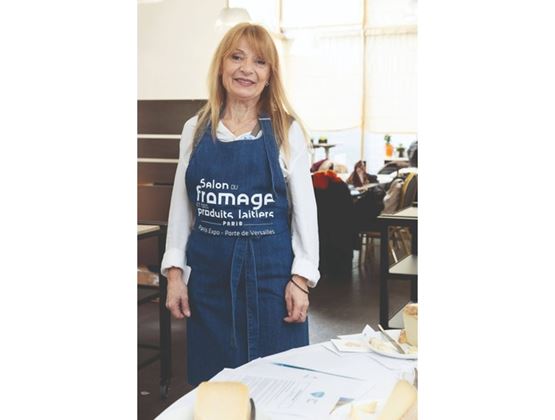
Annick Polese, President of the Fédération des Fromagers de France
“Cheese has its roots in a millennia-old tradition, built on expertise, regional heritage and the passing down of knowledge. Nevertheless, it is more than ever a modern product, capable of adapting to new ways of enjoying it and to contemporary lifestyles. Today, there is always a way to enjoy cheese at any time of day: from breakfast to dinner, as a snack, in cooking, on a cheese board, in savoury or sweet forms, as an aperitif or as the centrepiece of a meal. This is the true strength of cheese merchants: offering a vibrant, creative and bespoke range, in tune with consumers’ expectations, whilst remaining true to the product’s authenticity. So that fine cheeses remain in good hands.”
Selected highlights
You can be a Munster cheese ripener with time-honoured expertise AND still be keen on cutting-edge innovations. Take Maison Fischer, for example, which has been based in the heart of the Alsatian vineyards for exactly one hundred years: its cheeky ‘Chauffe-moi!’ range appeals as much for its quick, easy and effective preparation when served warm as for its original, on-trend recipes (with chilli, flammenkueche-style, or breaded with pretzel crumbs). Delicious, convivial moments await.
Carrying on Swiss cheese-making traditions by producing AOP cheeses and signature specialities inspired by the Fribourg region: this has been Fromagerie Moléson’s mission since 1965. So when it came to creating an easy-to-prepare sachet fondue, there was no hesitation over the blend: 50% Gruyère, 50% Vacherin Fribourgeois. Its AOP-certified ‘Fondue Moitié-Moitié’ thus combines high quality with convenience to satisfy even the most discerning palates.
New ways of enjoying cheese are reshaping the market
This trend points to a cheese sector on the move, capable of adapting to faster-paced, more mobile and sometimes more solitary lifestyles, without sacrificing its symbolic role as a food for sharing. Figures released by the INAO and the CNAOL on products bearing official quality labels confirm the resilience of exceptional cheeses: their turnover exceeded 3 billion euros in 2024, proof that traditional quality continues to find its audience, even in uses that deviate from the classic cheese platter.
This versatility opens up concrete opportunities for industry professionals. For producers, it encourages a rethink of formats, signature recipes and collaborations with chefs. For cheese retailers, it justifies a broader range where grilled cheese, appetiser platters, ready-to-use fondue and all-season cooking cheeses sit alongside long-matured wheels. For supermarkets and delicatessens, it raises the question of merchandising: how can these new uses be brought together on the same shelf without losing sight of the product’s identity? And for the catering sector, it opens up a field of experimentation around non-alcoholic pairings, a subject that still has a long way to go.