BACK TO BASICS: THE TREND DRIVING THE RISE OF PDO CHEESES

One trend stands out clearly: consumers want to know where their food comes from, who made it, and how. The first of five trends identified for 2026 in the Trend Report published by the Cheese and Dairy Products Show, this return to basics propels local, artisanal and traceable products to the top of the list of purchasing criteria, and makes PDOs benchmarks of trust in a stressful everyday life. The 2024 figures from the National Institute for Origin and Quality confirm this: 272,236 tonnes sold and over 3 billion euros in turnover for dairy products with a geographical indication.
Trend #1: Return to basics – Local, artisanal, traceable
The trend at a glance
Consumers are hungry for local products, clearly identified producers and artisanal methods. And they won’t settle for a vague label: they want to know the origin of the milk, understand the production techniques and see concrete commitments. Transparency is no longer a bonus; it has become a purchasing criterion in its own right, prompting brands to prove their credentials.
This return to basics is taking place against a turbulent backdrop. Geopolitical tensions, economic uncertainties and financial concerns: these factors are fuelling a sense of vulnerability. All generations are affected, but ‘Gen Z’ (born between 1997 and 2010) is particularly sensitive to this. In response, households are turning to tried-and-tested values, familiar recipes and trusted brands rooted in their local area. Tradition reassures them. It gives them back a sense of control. And it brings stability to their plates.
In this context, the criterion of local sourcing is decisive: 64 per cent of French people consider it important for a product to be made in their region, and 3 in 5 have increased their consumption of local products over the past year (Ipsos-E.Leclerc, The French and the consumption of local products, 2025). Meanwhile, 48 per cent of French cheese consumers believe that a cheese platter should, above all, showcase local produce and regional specialities, according to our latest study. Short supply chains and farmers’ markets are therefore gaining momentum, whilst French cheeses and dairy products bearing official quality and origin labels (51 PDOs and 12 PGIs) are faring particularly well: their turnover exceeded 3 billion euros in 2024. The AOP label, which reflects expertise recognised by the Fédération des Fromagers de France, enjoys the trust of 80 per cent of consumers (CNIEL-CNAOL-Kantar, AOP Awareness Barometer, 2025).
The 2025 World Cheese Awards confirmed this trend on an international scale: the top five places in its rankings are occupied by products that embody a specific terroir and meet stringent specifications. In short, all over the world, local expertise is a treat for the taste buds!
Reassurance: a universal key ingredient
An expert’s view
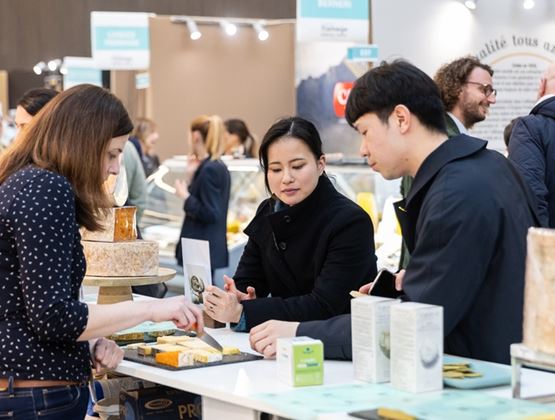
Emilie Cavero – Cheesemonger and trainer, creator of the podcast ‘Les Tribulations d’une fromagère’ and co-chair of the Marché Victor Hugo in Toulouse
‘What I see at the counter every day is now confirmed by the figures: consumers no longer simply want to buy cheese. They want to know where it comes from, who made it, and how.
For several years now, I’ve noticed a profound shift in expectations. My customers are asking increasingly specific questions about the milk, the livestock rearing and the ripening methods. This isn’t mistrust: it’s a form of commitment. They’re making a conscious choice to support transparent supply chains, identifiable producers and vibrant local communities.
PDOs and PGIs are no longer just quality labels; they have become benchmarks of trust in an uncertain world. When I present an Ossau-Iraty or a Roquefort, I’m not just selling a product: I’m sharing a story, expertise and a sense of place. And that’s what people value.
This return to our roots isn’t about nostalgia. It’s demanding. And that is precisely what makes our trade more essential than ever.”
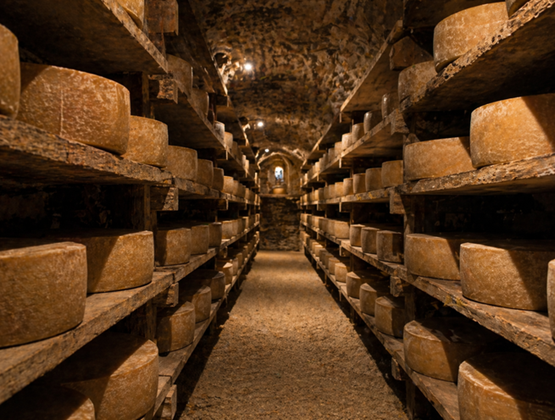
Caseificio Tosi – Nestled between the shores of Lakes Maggiore and Orta, Caseificio Tosi is the smallest member of the Gorgonzola PDO consortium. The Tosi family proudly claims its status as artisans and makes it a point of honour to uphold exclusively traditional methods. Nothing is therefore left to chance when it comes to preserving the authenticity of its cheeses: small 600-litre vats, each wheel salted by hand, maturing on wooden planks… The result: products with an inimitable aromatic signature. tosigorgonzola.com
From the shop shelf to the trade show, the movement continues
This first trend for 2026 is already shaping the presentation of cheese platters and display counters that will captivate trade visitors at the Cheese and Dairy Products Show, from 7 to 9 June 2026 at Paris Expo Porte de Versailles.