
FRENCH CHEESES: 4 TRENDS EVERY CHEESE LOVER SHOULD KNOW

France’s reputation as the world’s great cheese nation is well earned. Yet behind this familiar image lies a sector undergoing significant change, being reshaped by the strong identities of its regional production areas, the rising prominence of hard-pressed cheeses, the continued momentum of PDO varieties, and growing competition in the fast-expanding market for cheeses used in cooking.
Let’s look at the four dynamics that are currently defining the direction of the French cheese market and increasingly influencing what consumers see on shelves.
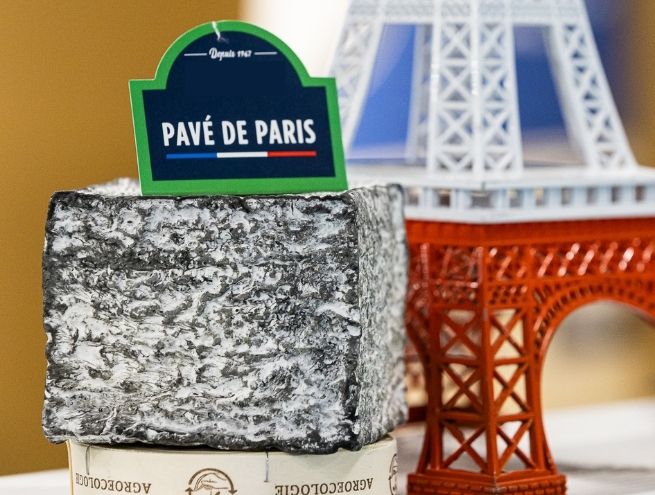
1. Cow, goat or sheep cheese: the strength of France’s cheese sector lies in its diversity
The breadth of varieties within the French cheese sector remains one of its defining strengths, rooted in the richness of its terroirs, the depth of its craftsmanship, and the remarkable diversity of its products.
At European level in 2024, France ranked as the second-largest producer of cow’s milk, collecting 23 billion litres, of which 36% was dedicated to cheese production. It also led the continent in goat’s milk production, with 500 million litres collected, and placed third for sheep’s milk, reaching 291 million litres.1
In recent years, however, cheese production volumes in France have evolved differently across categories, with each type of cheese following its own distinct trajectory.2
Cow’s milk cheeses
Goat’s milk cheeses
Sheep’s milk cheeses
2. PDO cheeses from France that continue to show robust growth
France continues to lead the way in high value-added cheeses, particularly through its Protected Designations of Origin (PDOs) label. Dairy PDOs now span almost the entire country, with Brittany being the sole exception, and today account for 10% of all cow’s milk collected, 11% of goat’s milk and 31% of sheep’s milk.4
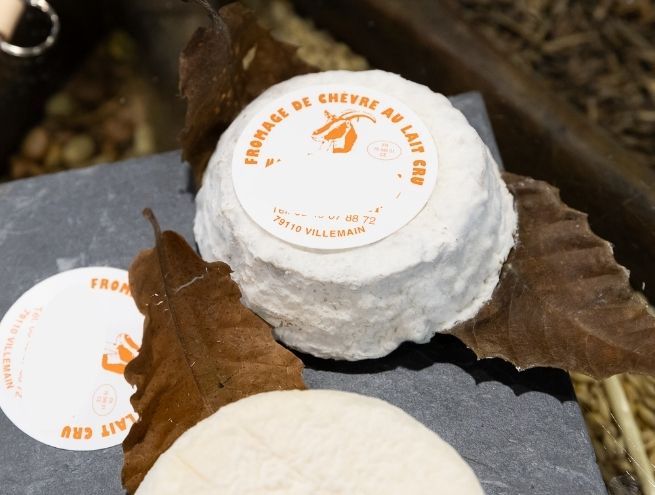
According to the National Council for Dairy Designations of Origin (Cnaol), 2024 saw sales of 202,500 tonnes across France’s 46 PDO cheeses. This segment continues to expand, underscoring both its dynamism and the strong market appeal of French cheeses. In June 2026, the Mothais sur Feuille, a goat’s cheese matured on chestnut leaves, became the country’s 47th PDO cheese.5
A similar trend can be observed for PGIs (Protected Geographical Indications), with production reaching 33,382 tonnes in 2024.5
Another highly promising pillar of the French dairy sector is raw-milk cheese, whose production reached approximately 200,000 tonnes in 2024.6
French PDO cheeses that truly stand out on the crowded cheese board
Which PDO cow’s-milk cheeses have been steadily winning over new consumers since 2001? Comté leads the way, with around 65,000 tonnes produced in 2024, followed by Morbier at 11,000 tonnes and Maroilles at 4,500 tonnes.
In the sheep’s-milk category, Ossau-Iraty (4,500 tonnes) continues to gain popularity, whilst among goat’s-milk PDO cheeses, Sainte-Maure de Touraine (1,900 tonnes) and Rocamadour (more than 1,200 tonnes) are also enjoying growing success.7
 Comté
Comté Maroilles
 Ossau-Iraty
 Sainte-Maute de Touraine
3. French hard cheeses are stepping up to the mark
In the world of French cow’s-milk cheeses, whether or not they are PDO, two categories have clearly pulled ahead in recent years: hard-pressed cooked cheeses and hard-pressed uncooked cheeses, both showing sustained momentum.
The hard-pressed cooked segment, led by Comté, Abondance and Emmental cheese, surpassed 340,000 tonnes of production in 2025. Hard-pressed uncooked cheeses, including Morbier, Cantal cheese and Saint-Nectaire, are close behind, reaching nearly 260,000 tonnes.8
Behind these two dairy market leaders, stretched-curd cheeses (mozzarella, burrata, etc.), totalling around 84,000 tonnes, and French blue cheeses (Fourme d’Ambert, Roquefort, etc.), totalling nearly 37,000 tonnes, are holding their own.9
French soft cheeses, including Brie, Coulommiers and Camembert, are the only category experiencing a decline, falling from 445,000 tonnes in 2001 to 392,000 tonnes in 2025. Yet this downward trend does not undermine France’s dominant position in this segment.10




When Raclette cheese becomes more than a winter staple
A quintessential French favourite, raclette is proving to be a powerful growth market for the French cheese industry, with production rising steadily from just over 40,000 tonnes in 2021 to 69,000 tonnes in 2024, representing an impressive 72.5% increase.11
Even more striking, raclette is rapidly breaking free from its traditional winter niche. Birthdays, casual evenings with friends and house-warming parties, it now fits effortlessly into any occasion all year round.
Its success rests on a winning combination of factors: shared enjoyment, simplicity and accessibility.
Cheeses for cooking are gaining popularity… but competition is fierce
This is undoubtedly one of the main challenges facing the French dairy sector. French cheese producers have not yet managed to establish a strong position in the market for cooking cheeses and internationally popular varieties such as mozzarella, Gouda and Cheddar.
While these cheese markets are undeniably competitive, they are also highly dynamic, driven by evolving food habits. As Benoît Rouyer, Director of Economic Forecasting at Cniel, highlighted during a conference at the Cheese and Dairy Products Fair, French producers have struggled to gain traction in these segments for nearly two decades, and the gap continues to widen.
One figure alone illustrates the scale of the challenge: in 2024, Germany produced 400,000 tonnes more stretched-curd cheese than France, equivalent to more than 3 billion additional litres of milk being processed and valorised.12
France VS Germany
The stretched-curd cheese market remains a strategic growth opportunity for the French cheese industry.
Production driven by changing consumer habits and the growing demand for ingredient cheeses.
tonnes of stretched-curd cheese produced in 2024
French cheese lovers are moving beyond the cheese platter
According to a study by Too Good To Go & Appinio Studies published in October 2025, 65% of French consumers favour grated cheeses, such as Emmental and Gruyère, in their everyday cooking, while 37% prefer stretched-curd cheese varieties like mozzarella and burrata.
In France and worldwide, these figures highlight a fundamental shift in consumption patterns towards essential ingredients in convivial hot dishes, such as pizza cheese, melting cheeses for the ever-popular grilled cheese sandwich, pasta dishes, burgers and gratins.
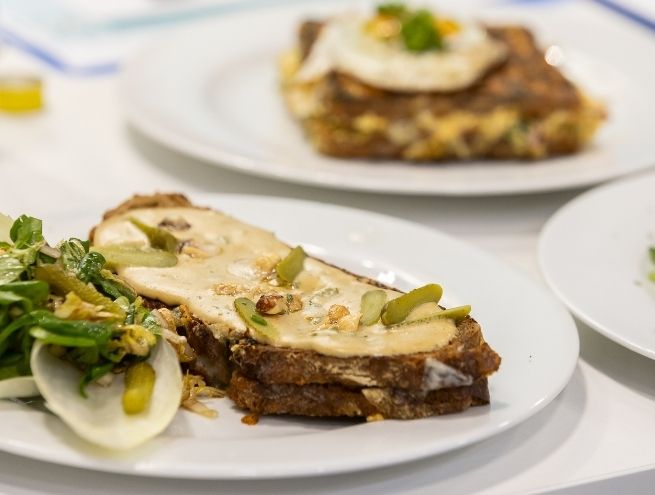
The new paradigm for French cheese industry trends hinges on achieving the right balance. While PDO cheeses, raw-milk production, the breadth of France’s cheese varieties and the strength of pressed cheeses remain core assets, the challenge also lies in making greater inroads into the markets for cheese used as an ingredient, where an ever-growing share of future applications is set to emerge.
FAQ: Everything you need to know about french cheese market trends
-
What are the trends in the French cheese market?The French cheese market is characterised by several major trends: the diversity of cow’s, goat’s and sheep’s milk cheeses; the strong performance of PDO and raw-milk cheeses; and the growth in hard cheeses. At the same time, consumption patterns are changing, and cheeses used as ingredients in everyday dishes are playing an increasingly significant role in consumption.
-
Which cheeses are produced in the greatest quantities in France?Cow’s milk cheeses dominate French production by a wide margin, with around 1.75 million tonnes produced annually. Among these, pressed cheeses play a significant role: in 2025, production exceeded 340,000 tonnes for cooked pressed cheeses and was approaching 260,000 tonnes for uncooked pressed cheeses. Soft cheeses also remain very prevalent, with 392,000 tonnes produced in 2025 despite a decline since 2001.
-
How is cheese consumption changing in France?In France, cheese is increasingly being consumed outside the traditional cheese platter. Grated cheeses, mozzarella and burrata, in particular, are finding their way into pizzas, pasta dishes, burgers, gratins and other hot meals. This shift in consumption patterns is driving the development of ‘ingredient’ cheeses and presents both an opportunity and a challenge for the French cheese industry.
Sources:
- Cniel / Eurostat, FAM
- Cniel / FAM – EAL 2015 to 2024 + Estimated figure for 2025 based on the percentage change in EML. Production figures do not include processed cheese.
- Cniel / EAL
- Cnaol
- Ibid.
- EAL
- Cnaol
- Cniel / FAM – EAL 2015 to 2024 + Estimated figure for 2025 based on the percentage change in EML. Production figures do not include processed cheese.
- Ibid.
- Ibid.
- Cniel / FranceAgriMer
- Cniel / FranceAgriMer and ZMB